Ghost is for All
Authentically reimagining citizen services and experiences for everyone
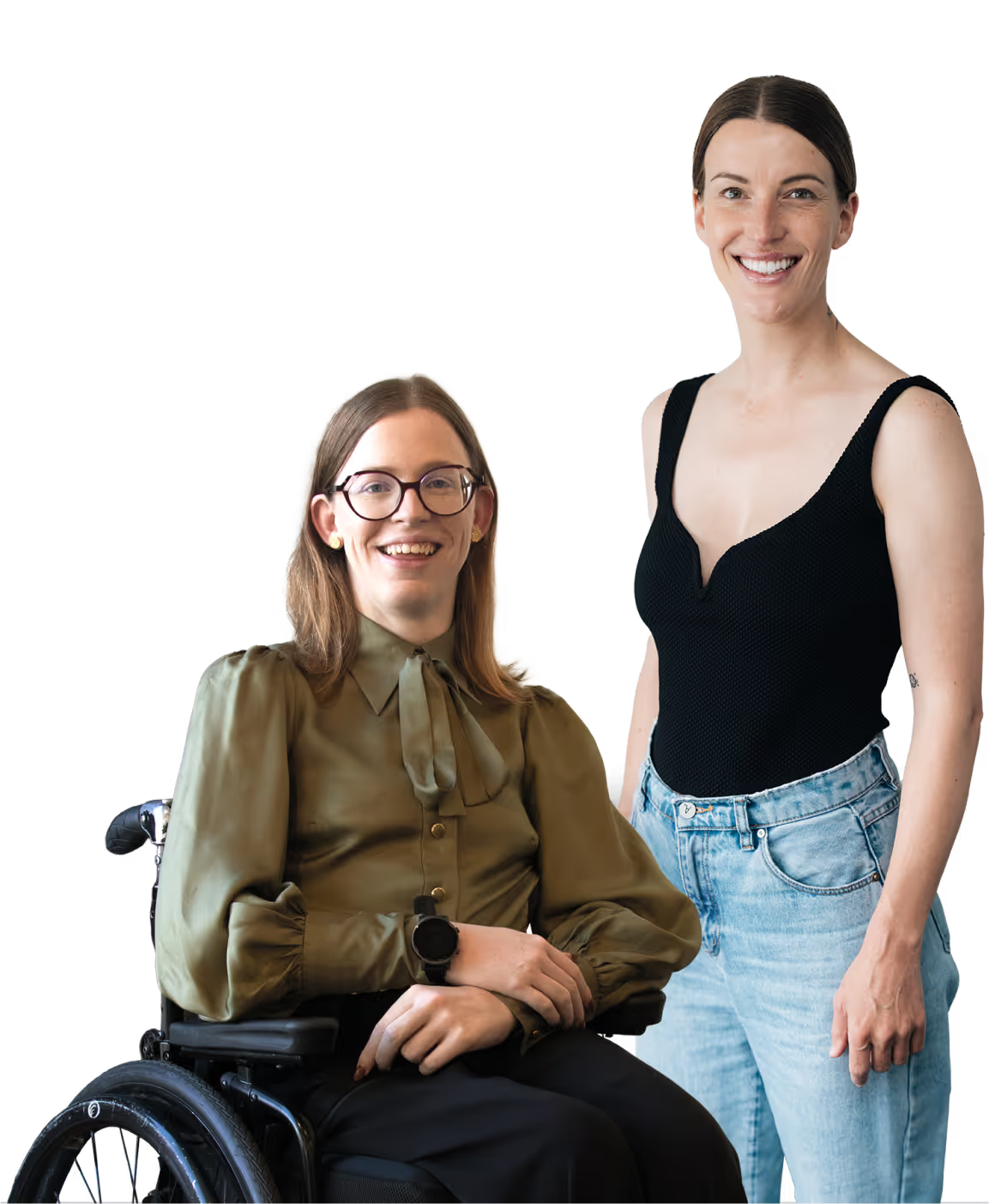
'Ghost is for All' is a partnership that combines the visionary forces of Ghost Dynamics' strategic design practice, and All is for All’s creative consultancy team, all of whom have lived experience of disability. Championed by Julie Leuzinger and Grace Stratton, our shared mission is to authentically reimagine citizen services to be truly inclusive and deliver better outcomes for everyone.
Better practices,
better outcomes.
In New Zealand and Australia alone, ~18-24% of government and business audiences are being excluded from your services if you don't already have an authentic and robust approach to consider and meet the specific needs of people living with disability. What about the aging population, or those with lower digital ability? This number only gets larger.
In an age where digital innovation is rapidly transforming citizen services and experiences, there is a tendency to prioritise efficiency gains and self-service solutions, often at the expense of those with lower levels of digital access. While the aim is to optimise public spending and cut costs, especially in tough economic times, this can inadvertently exclude those who need the service most, and create friction that drives people to higher cost channels or exacerbates the issues that we are meant to be solving for.
1 in 4
1.1 million New Zealanders have some form of impairment or disability. That’s about one in four.
Office for Disability Issues4.4m
About 18% of Australians have some form of impairment or disability. That’s about one in six people.
Australian Bureau of Statistics' (ABS) 2018 Survey of Disability, Ageing and Carers (SDAC)$40b
Annual disposable income of Australians living with disability is $40 billion dollars.
Centre for Inclusive design, 2019 PwC Report
Designing for all
The digital transformation of services often prioritise the needs of those most able to cope without them.
The people being 'left behind' are more likely to be those that most need the services they are being excluded from. We can solve this together.
We approach digital innovation in the public and emergency service sectors with a holistic perspective. We leverage new technologies for enhanced efficiency while ensuring we address, rather than exacerbate, existing issues and solve for new challenges that may arise in the process.

Increase audience reach
Millions of people in New Zealand and Australia live with disabilities or with reduced ability such as poor eyesight. As life expectancy increases and populations continue to age, the proportion of impacted citizens will only grow. Services designed with the needs of people experiencing poverty, disability, low literacy, or the effects of ageing in mind can reach four times the number of intended people and deliver increased uptake, satisfaction, and value.

Accessibility is an international legal requirement
Governments and regulators are increasingly strengthening the rights of all people online. The New Zealand and Australian Governments have mandated web standards for digital public services. The UN defined accessibility as a basic human right. The EU has the European Accessibility Act, enforceable from 2025. In the U.S., accessibility lawsuits are increasing exponentially. So if the 'carrot' isn't compelling, consider the 'stick' of significant legal risk.

creating a more level playing field,
it's about making services easier
to use for everyone.
Designing for permanent disabilities also covers everyday life
It’s more common to think about people with permanent disabilities such as blindness, but 'designing for all' also includes people with temporary impairments, changing abilities, poor internet connection, assistive technologies, and more. Consider someone using your website on their phone while on a noisy bus with patchy internet and a wet screen. Designing to work in this environment also caters for a person's needs beyond their individual ability - it also considers different modes and spaces we all operate in.
We all experience temporary impairments. Distractions. Bad wi-fi. Foggy glasses. Inclusive thinking is really designing for reality, making services more usable in more conditions, for more people.
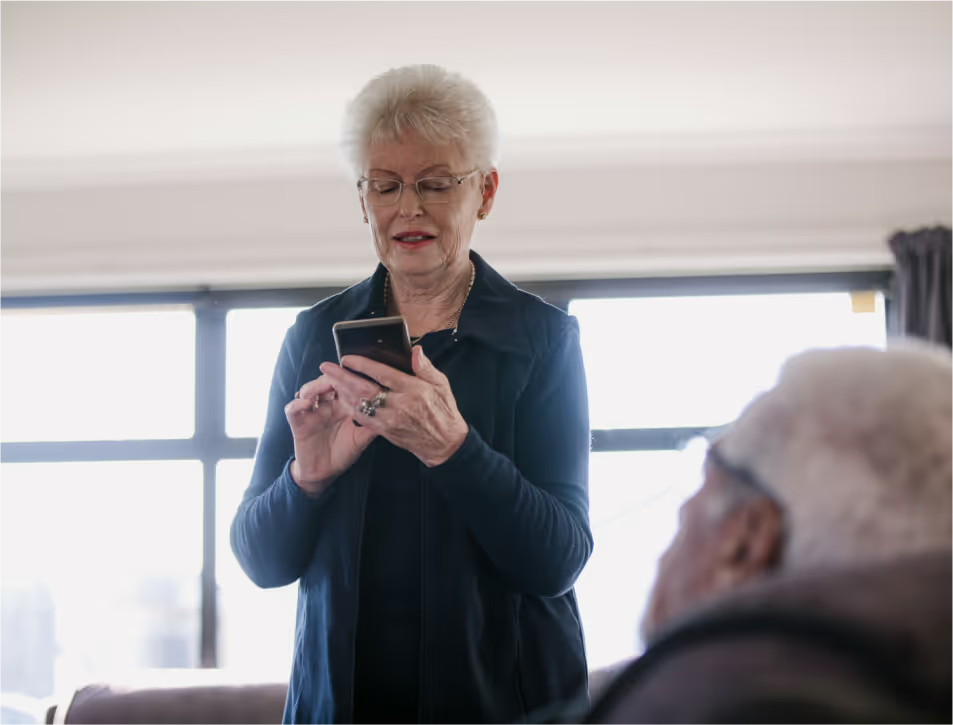
Additionally, as we age, we may find ourselves less tech-savvy and experiencing cognitive decline. Digital services create new avenues for bad actors to target people with lower systems literacy and confidence. Thinking beyond compliance is key to mitigate the risk and cost of misuse.
More than half of over 65-year-olds experienced an actual, or attempted scam in New Zealand in 2023.
Source: ANZ Bank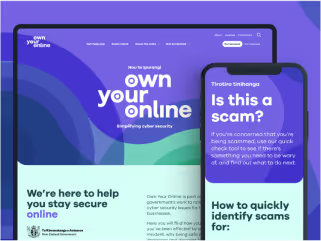

Key benefits
Embracing a ‘designing for all’ ethos has a strong case for investment.
A 'designing for all' ethos helps create products and services that can reach a greater potential audience, better mitigate risks, and ultimately, improve return on investment. It also results in a positive experience for more people, increasing satisfaction, task success, and advocacy, while reducing support costs and more expensive development rework later in the process.
01
Increase audience reach, fit, satisfaction and uptake.
02
Minimise legal risk and increase compliance.
03
Enhance brand, reputation, and preference.
04
Reduce cost to serve incurred through support channels and development rework.
While these aspects are all valuable, it's up to you to determine which are most important for your organisation, and guide our focus together.
Inclusive design thinking is also a key driver of innovation. Targeting 'edge user' needs often results in capabilities that are valuable at scale. For example, 'auto complete' was originally introduced for disabled users, but rapidly became mainstream due to its universal value. The same is true for the electric toothbrush, and video subtitles.
Subtitles also help in public or noisy areas, and for concentration or translation purposes.
Your partner for inclusive, impactful solutions
Ghost and All Is For All are trusted partners with as much capability as you need — from strategy through to execution. Whether you are just starting to explore how your product or service could be more inclusive, or you are a long time advocate of "designing for all", we offer flexible services to support your journey.
As specialists with a proven track record of inclusive innovation, we have established relationships that bring diverse communities together effectively and respectfully.
We believe there are no inherently vulnerable communities. However, when invisible needs are overlooked or misunderstood, some become vulnerable. Our mission is to identify and elevate these needs to help lift everyone's wellbeing through the work we do.
Certifications and accreditations
As a combined team, we are committed to remaining current with evolving web standards and compliance guidelines, so you don't have to. Our practices and practitioners are certified by leading industry bodies.


Get in touch
Together, let's move what matters to you.


Ghost Dynamics
New Frontiers Network
Join with our New Frontiers Network to get access to exclusive events, insights and thought-leadership on how organisations are meeting the frontiers of Industrial AI, digital citizen infrastructure, human connectivity from the minds of experts at Ghost Dynamics, GHOST6, and our global network partnerships.