Background & context
As New Zealand’s 4th largest export earner, evolving what and how the international education sector delivers its products is strategically critical for New Zealand’s economy.
Education New Zealand, New Zealand Government’s export focussed organisation, created a sector wide Innovation Fund to explore next-gen products and delivery modes with support from New Zealand Treasury. The fund would enable successful applicants to develop and validate new international education products and delivery methods to help meet predicted skill demand. Products would provide international learners with pathways that connect ‘career’ and ‘cause’ in alignment with their values, while accommodating increasingly diverse learning preferences moving away from the conventional, physical degree paradigm.
Fund applicants were required to submit proposals under one of several themed shifts. Our team focussed on demonstrating how the education sector could move from generalised learning to a cause-based paradigm. Globally, we knew that more people were searching for a career cause or industry they were passionate about, but found it challenging to identify learning pathways that met this need. We also knew that learners were (and still are) seeking purpose first and career second, leading us to recognise an opportunity to create an education pathway product that could meet these cause-based needs.
Our solution - the Blue Economy hypothesis
Collaborating with two widely-published subject-matter experts with international standing in environmental science, we identified the blue economy as a strategic opportunity theme that could support ‘cause-led learning’ in export education, while also acting as a future catalyst for exponential growth within multiple sectors across New Zealand.
As the world shifts towards a sustainable blue economy supported by the World Bank, it is projected to double in size by 2030 generating over $3trillion USD per year globally and resulting in substantial job creation. For New Zealand, the blue economy opportunity could be what the tech sector was to Silicon Valley; New Zealand has the opportunity to generate a unique and world leading blue economy, making the most of one of largest marine estates in the world and transforming our geographic isolation into a major competitive advantage.


Research and development into emerging technologies will continue at pace over the next decade, yielding advancements in AI, quantum computing and biotechnology, among other technologies. For countries that can afford it, these technologies will provide partial solutions to a range of emerging crises, from addressing new health threats and a crunch in healthcare capacity to scaling food security and climate mitigation. For those that cannot, inequality and divergence will grow.
WEF’s Global Risks Report 2023
Partnering with AUT Ventures
Our team approached Auckland University of Technology’s (AUT) Ventures subsidiary with our blue economy hypothesis, inviting them to partner with us to secure funding from the Education New Zealand Innovation Fund.
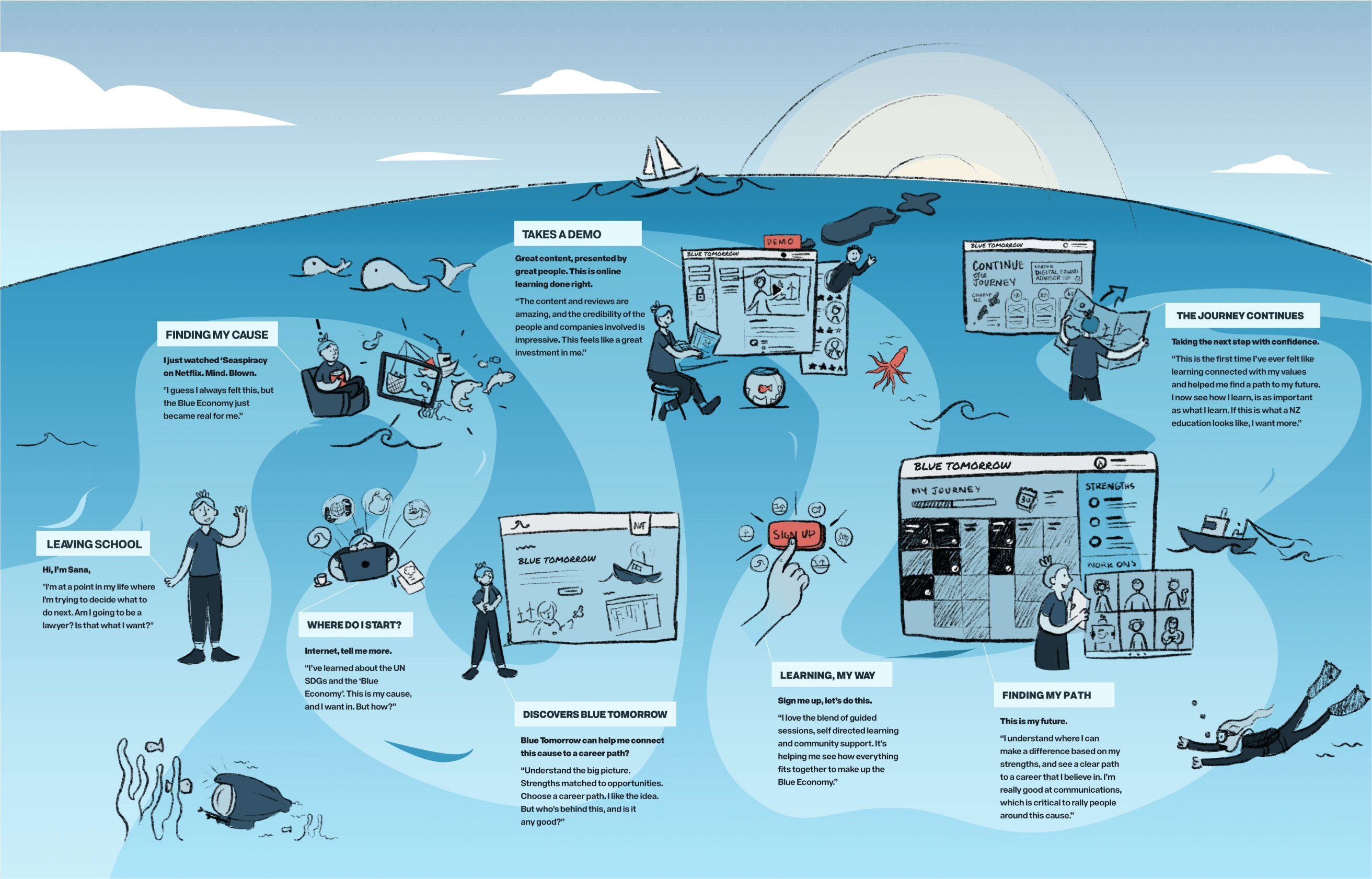
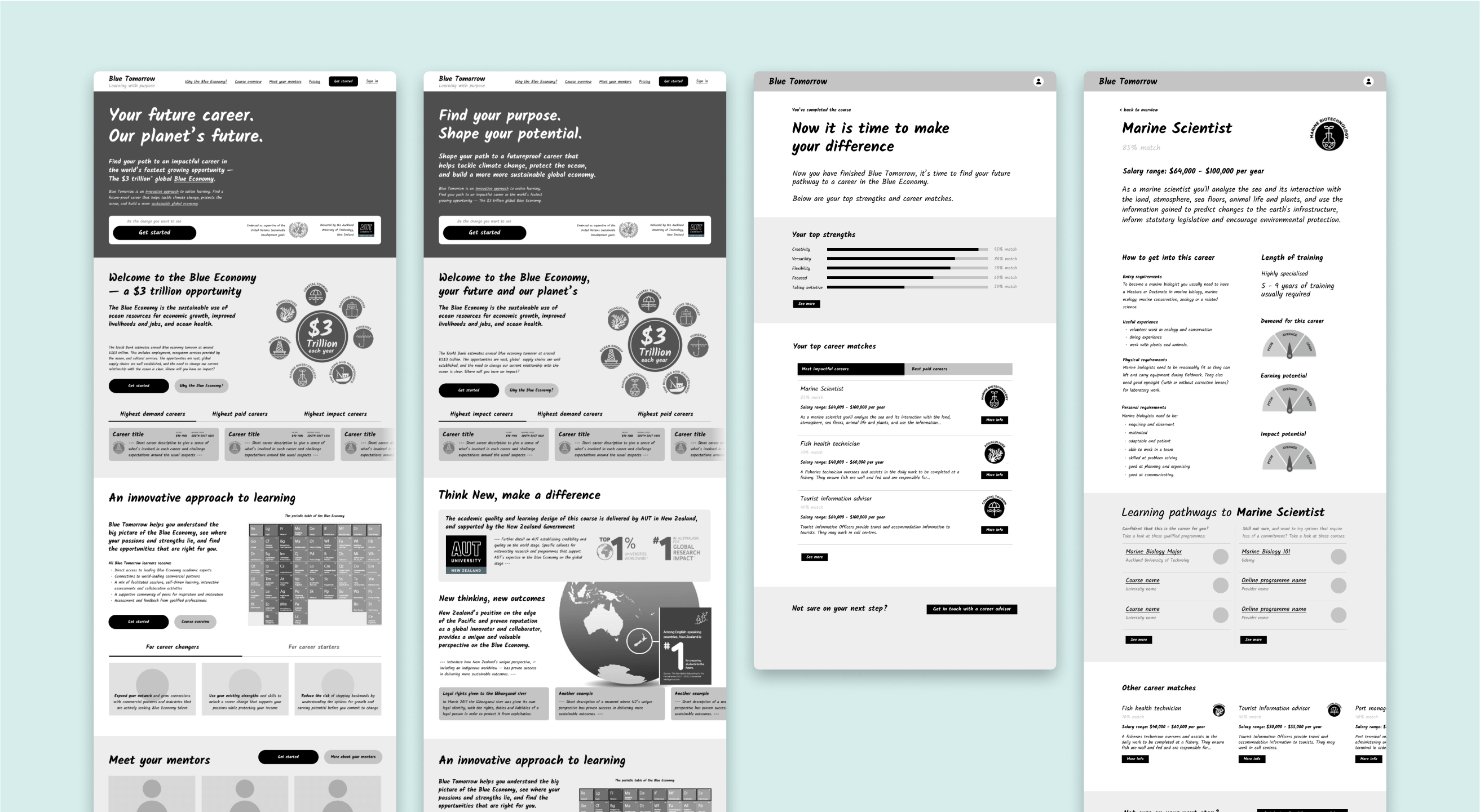
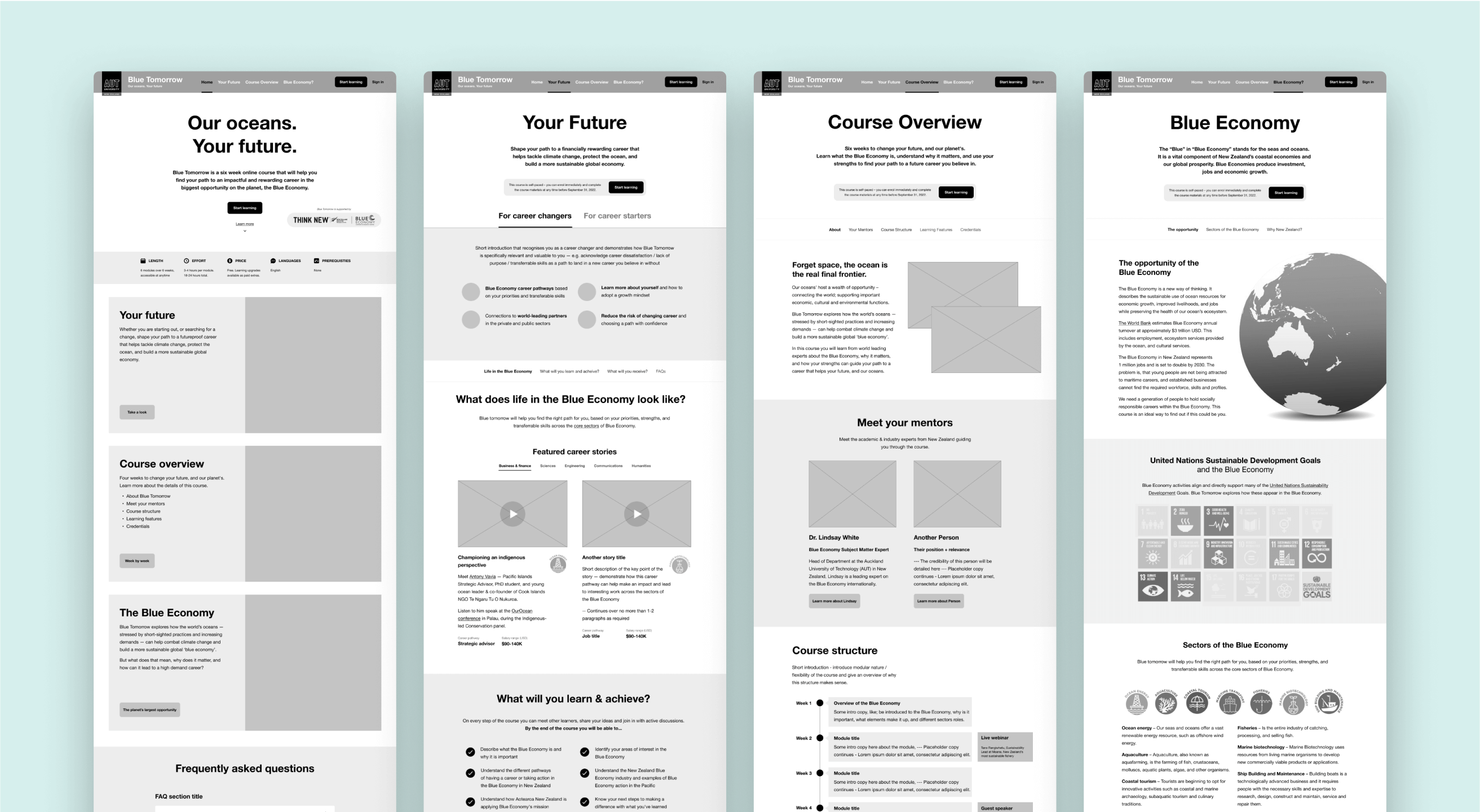
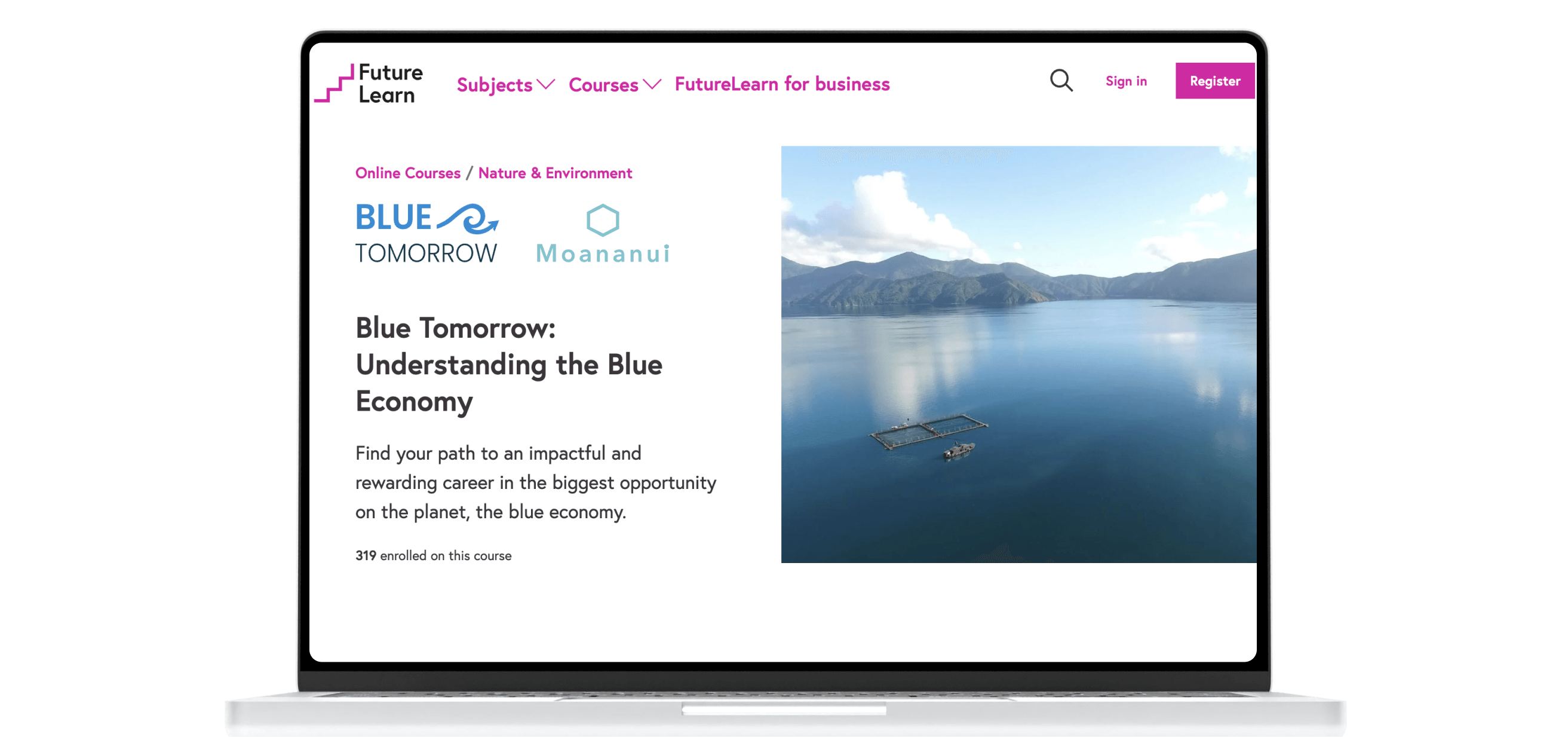
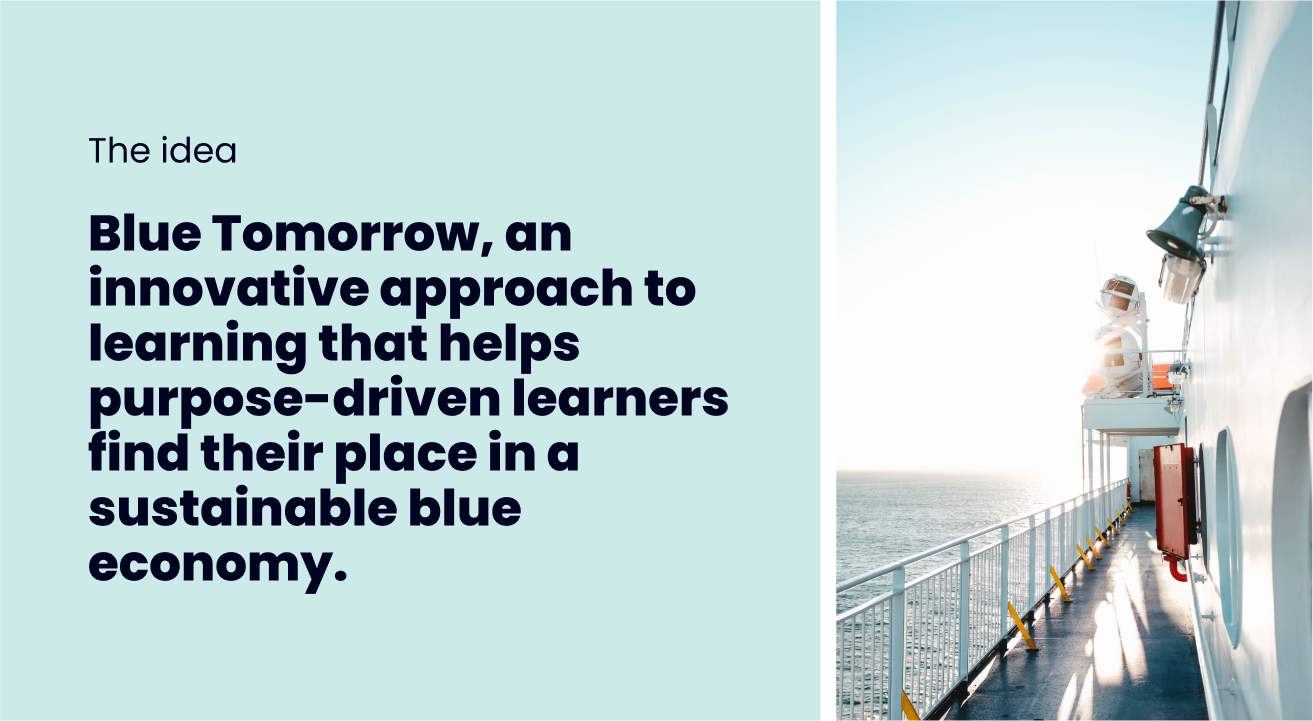
Together, we conceptualised, designed, and validated a pioneering blue economy pilot education course, embedding the concept of connecting purpose and career. Named 'Blue Tomorrow,' the course was positioned to prospective learners as an opportunity to help them find an impactful and rewarding career in the biggest opportunity on the planet, the Blue Economy.


Launch of a pilot course
As partners, we identified key faculty strengths and how they could be aligned or modified to meet the skills the Blue Economy needed to boom. Viable, integrated pathways from study to work were validated by private sector enterprises already demonstrating world-leading work in these areas, and potential Government enablers that would support and accelerate a proposition in this space were approached, including New Zealand’s National Institute of Water and Atmosphere (NIWA) and the Ministry of Foreign Affairs and Trade (MFAT).
Our efforts led to Moananui (Nelson Regions' Blue Economy Cluster created to develop New Zealand’s blue economy generate economic value, connect people, and improve ocean health), who supported our prototype by investing resources and expertise alongside Ghost and AUT Ventures to bring the ‘test’ to life.
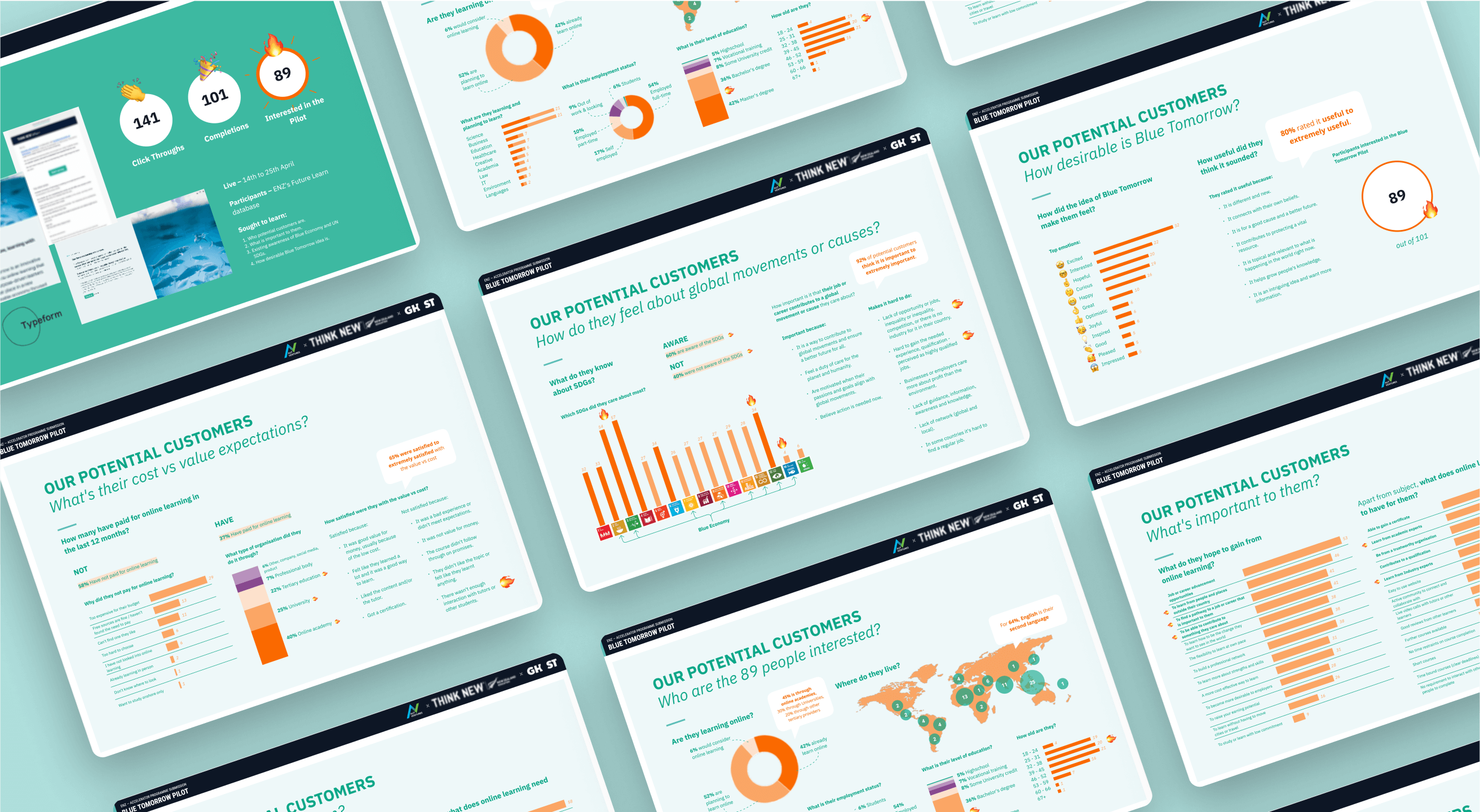
An initial international research phase was commenced to validate the Blue Tomorrow concept in broad terms, with positive responses informing a subsequent pilot version of the Blue Tomorrow course launching across two learning platforms online.
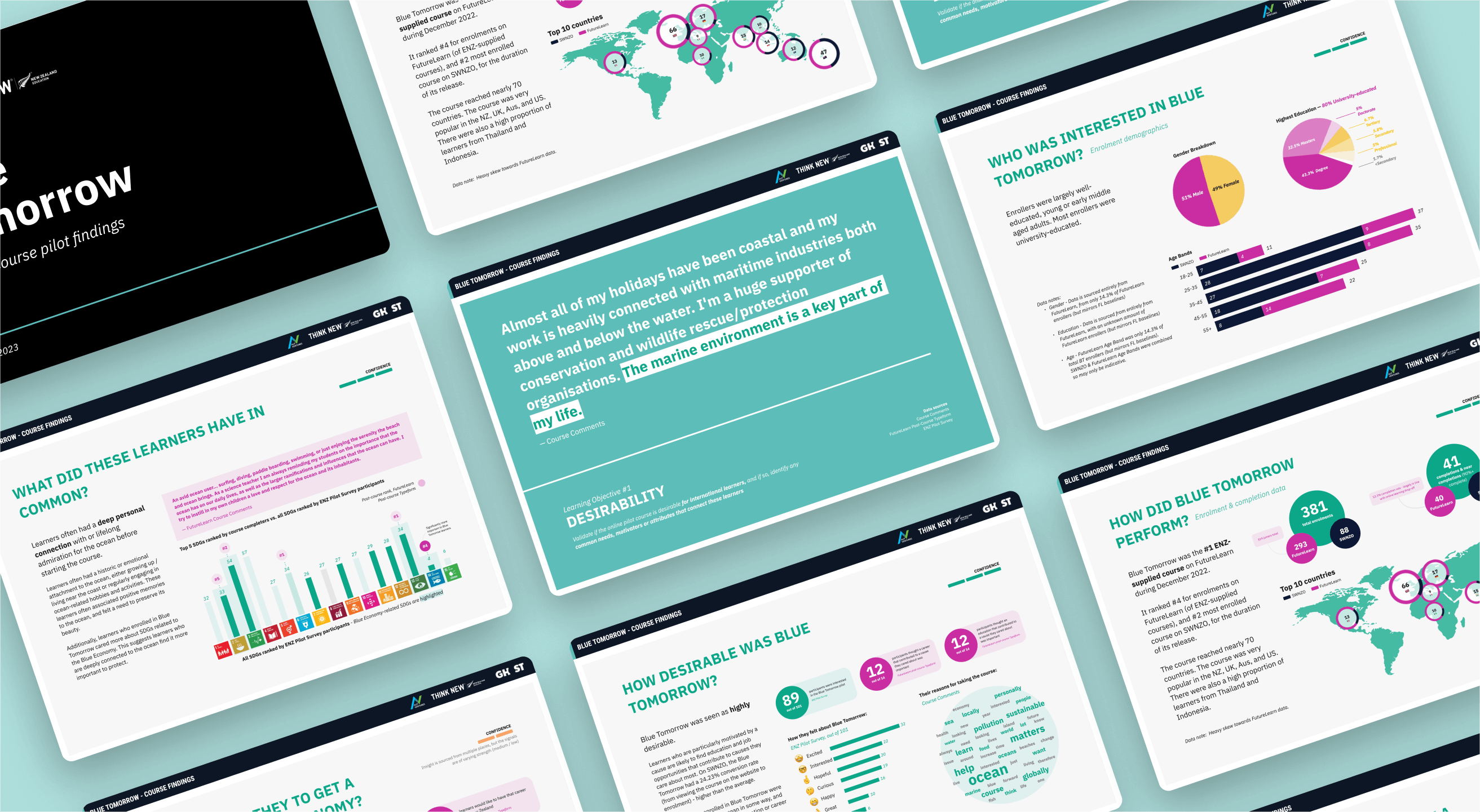
Valuable learnings for future courses of this nature were informed from course data and feedback, including understanding uptake, how the course translated into value for learners, how New Zealand’s reputation influenced the course, and how it affected learner’s propensity to study further with or in New Zealand.

Thank you for providing a very informative learning experience. I hadn't really heard about the "Blue Economy" before enrolling in this course, so it has been very enlightening.
Future Learn Course Comment