Background & context
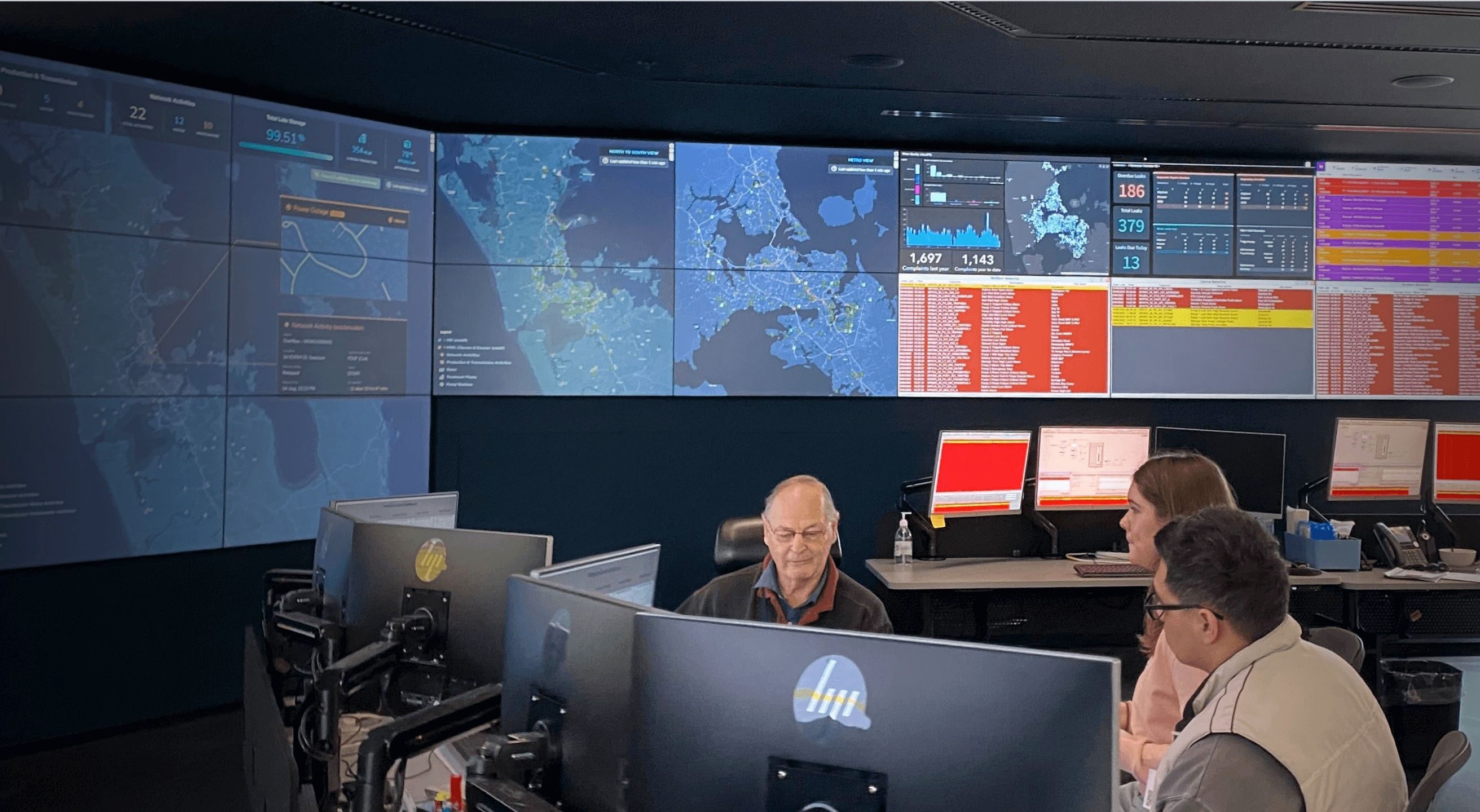
When managing water service assets, Watercare’s operational managers, asset owners, and diverse contracting workforce needed real-time, accurate data pulled from dozens of different first and third party sources to:
- See issues across the network of water and related infrastructure;
- Manage priorities, workforce capacity and deployment;
- Be able to see in real time what is going on across the network, where, and by who.
At the start of our in-house partnership with Watercare, we inherited the Activity Tracker’s MVP design from the previous UX lead. We joined the Product and Insights squad led by Leighton Tse to continue on-going design, user research, and collaboration with developers to get the product launched.
Thanks to our tight work with priority user groups, iterations were made to ensure crucial data and information was easy to access, explore and interpret. Our goal was to better inform planning and response activities, no matter who the stakeholders in the ecosystem were.
Actionable information with customisable modes
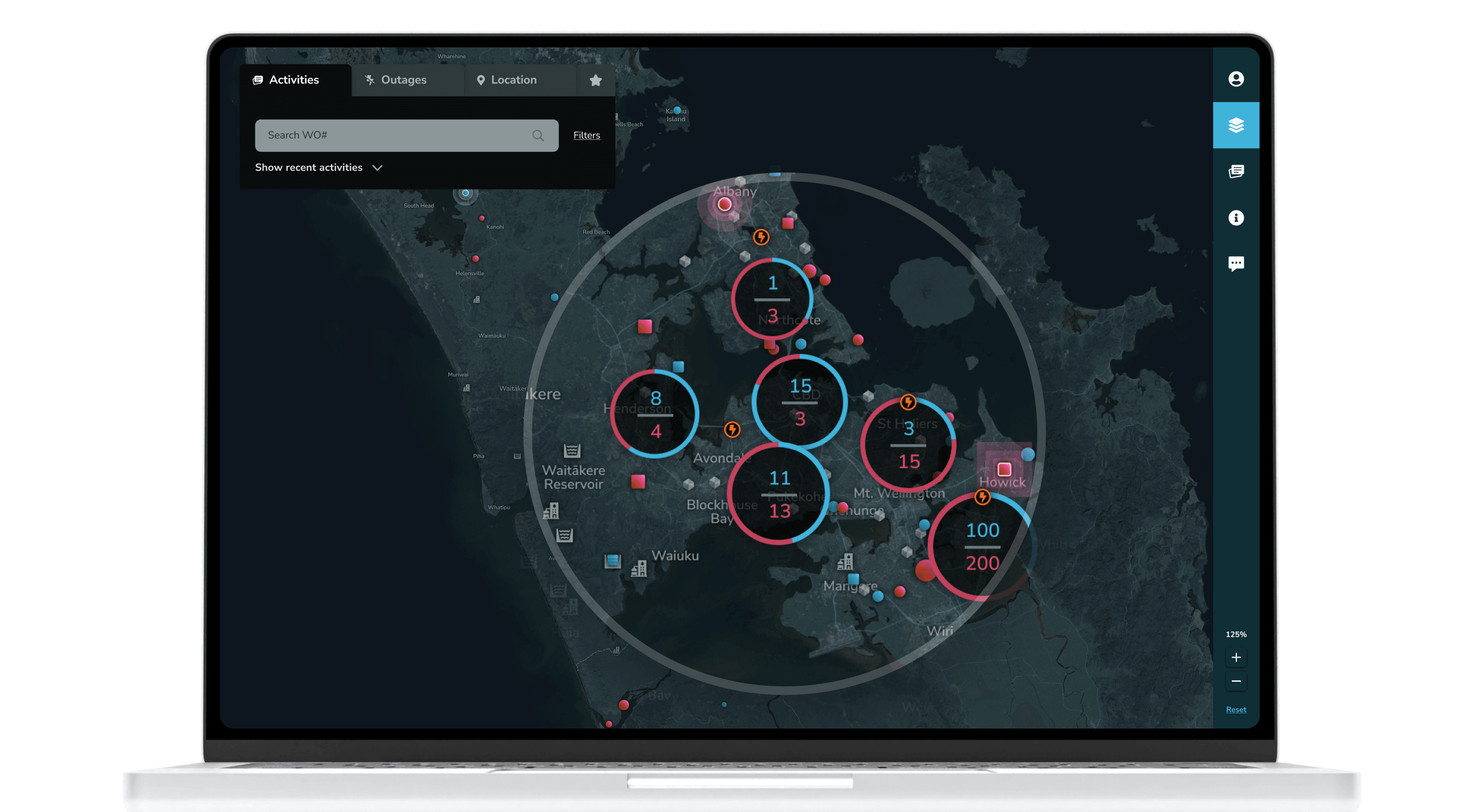
The Activity Tracker is a map-based tool to help Watercare staff track, investigate, and manage different water-related activities around Auckland.
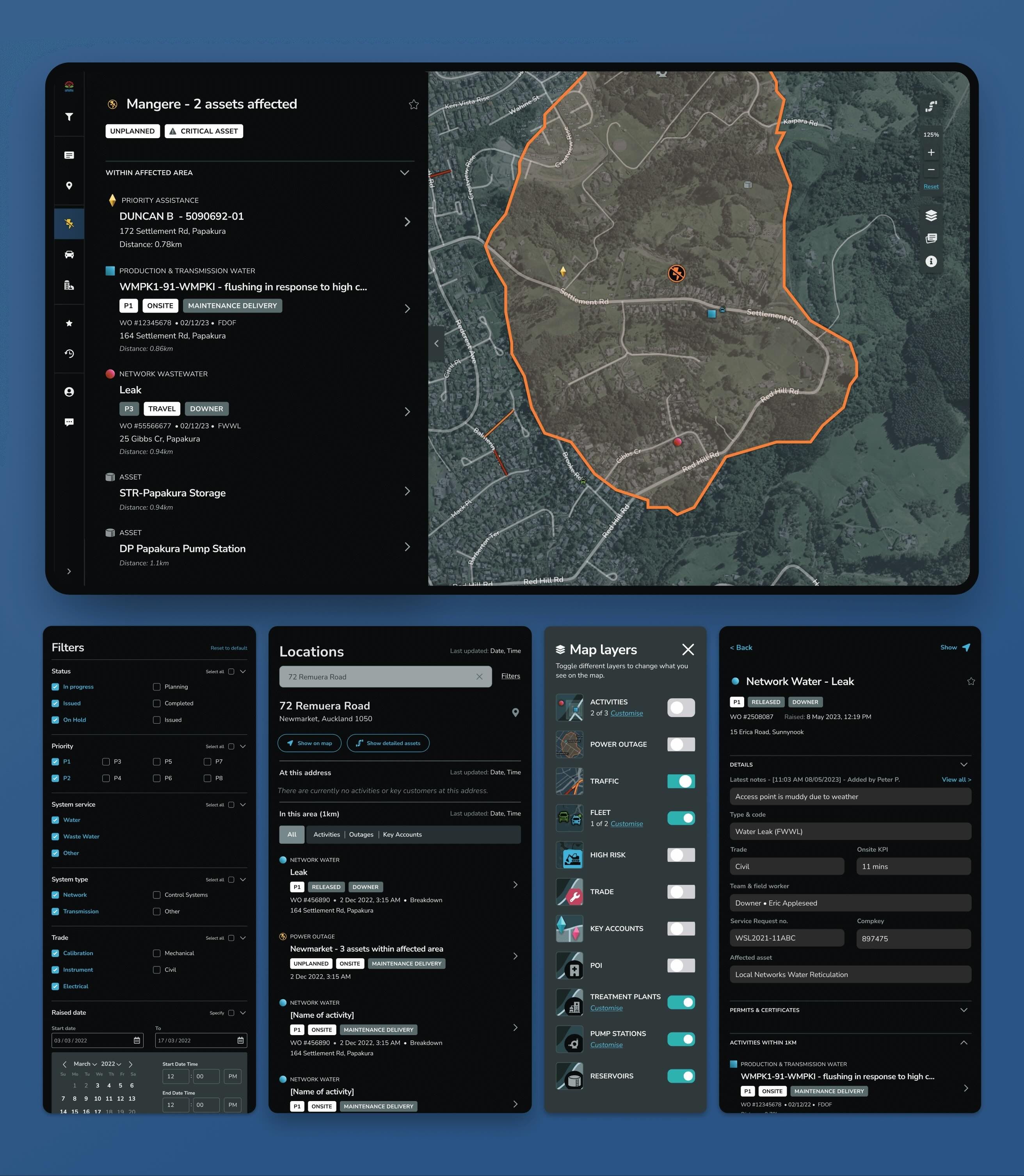
First and third party data are geospatially overlaid on the map, allowing users to cross-reference their internal logged work orders against environmental factors such as power outages, traffic incidents, or roading works so they can send their crew onsite efficiently.
Taking away the need to cross reference with different third party organisation tools reduces manual effort and the risk of missing information, with the added benefit of users being able to see these factors in the context of their logged work orders / activities.
Users can customise their view of the data using filters to see what's most relevant to them, so a variety of teams can work in the same tool, seeing the same information but in the most appropriate context.
Users can further investigate activities that are nearby, related or historical - allowing Watercare to take preventative action; this is often more cost and time effective when compared to responding reactively as activities escalate.

Small change, big impact
By enabling better visibility and access to the right information in real time, we enabled more effective choreography of support and maintenance of resources. We ultimately increased operational efficiency, in an industry where just small gains can have a huge impact - both financially and within the communities themselves by enabling faster response times and minimising disruption.
Ghost Dynamics have been highly collaborative in all design phases and undertaken effective user research and testing on a number of our products to validate and collate feedback from our users. These valuable insights have led to fit for purpose designs that have contributed to our ability to develop the best products with our users' needs at the forefront.
Leighton Tse
Product Owner - Watercare Product & Insights squad